An introduction to hepatology — its specialized branches, the multidisciplinary care it requires, and the diagnostic frontiers shaping how we treat liver disease today.
Hepatology is the branch of medicine that focuses on the study, diagnosis, prevention, and management of diseases and disorders affecting the liver, gallbladder, biliary tree, and pancreas.
Hepatologists are specialized physicians who treat conditions such as viral hepatitis, cirrhosis, liver cancer, and other liver-related diseases.1,5 Because the liver sits at the centre of metabolism, immunity, and detoxification, the specialty draws on internal medicine, oncology, surgery, radiology, and pathology in equal measure.
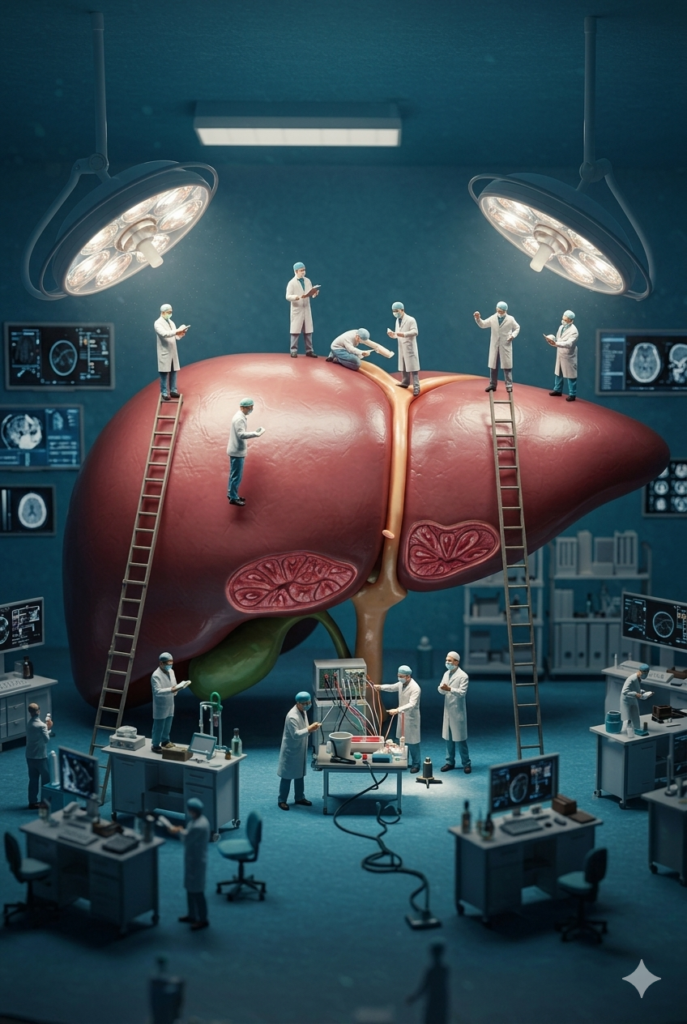
The vast diversity of liver pathology has led to the development of several distinct branches within hepatology. Each addresses a different patient population, technique, or stage of disease — together they cover the full arc of liver care.
Broad diagnosis and management of acute and chronic liver conditions — viral hepatitis A through E, alcohol-associated liver disease, MASLD, autoimmune hepatitis and primary biliary cholangitis.
For patients with end-stage liver disease or acute liver failure. Evaluates transplant candidates, manages complications of liver failure, and oversees lifelong immunosuppression to prevent rejection.
Liver and biliary disorders specific to infants, children, and adolescents — congenital malformations like biliary atresia, inherited metabolic errors, Wilson disease, and Alpha-1 antitrypsin deficiency.
Care for patients with primary liver cancers including hepatocellular carcinoma (HCC) and cholangiocarcinoma. Also manages liver toxicities from immune checkpoint inhibitors and other modern cancer therapies.
Blood-vessel disorders within the liver — Budd-Chiari syndrome, portal vein thrombosis, and the complex hemodynamics of portal hypertension.
Microscopic study of liver tissue. Hepatopathologists provide the definitive diagnosis for many complex diseases by identifying hallmark cellular changes through liver biopsies.
Highly specialized endoscopic procedures such as Endoscopic Retrograde Cholangiopancreatography (ERCP), used to diagnose and therapeutically treat blockages, stones, leaks, or tumors within the bile and pancreatic ducts
Because liver failure triggers systemic physiological cascades that affect the entire body, modern hepatology relies heavily on a multidisciplinary, team-based approach. A comprehensive hepatology network typically brings together the following specialists and professionals.
“The liver does not fail in isolation — and so it cannot be cared for in isolation. Every clinic visit is a meeting of disciplines.”
The primary physicians directing liver care, diagnosis, and non-surgical treatments.
Surgical experts performing liver resections, bile duct repairs, and deceased or living-donor liver transplants
Specialists who work alongside hepatologists in tumor boards to create personalized, multi-modal cancer treatment plans.
Perform minimally invasive, image-guided procedures like tumor ablation and use advanced imaging to monitor liver health.
Crucial for holistic care when liver disease ties into metabolic syndrome, diabetes, or chronic viral infection.
Specialist nurses, APPs, dietitians, psychologists, and social workers — providing nutritional, behavioral, and long-term coordination.
Modern hepatologists utilize cutting-edge tools to provide accurate and patient-friendly care. The field is rapidly evolving on three fronts: non-invasive diagnosis, targeted therapeutics, and bioartificial support.
Transient elastography (FibroScan) and Magnetic Resonance Elastography (MRE) painlessly measure liver stiffness, scarring, and fat buildup — replacing many biopsies.18–19
Breakthroughs in targeted medications for fatty liver disease and highly effective direct-acting antiviral cures for Hepatitis C have reshaped what is treatable.20,21
Innovations in bioartificial liver support are extending bridges to transplant and reshaping management of acute liver failure.22
Use our directory to find a qualified hepatologist near you, or join the Society to access educational resources, mentorship programs, and member-only journals
